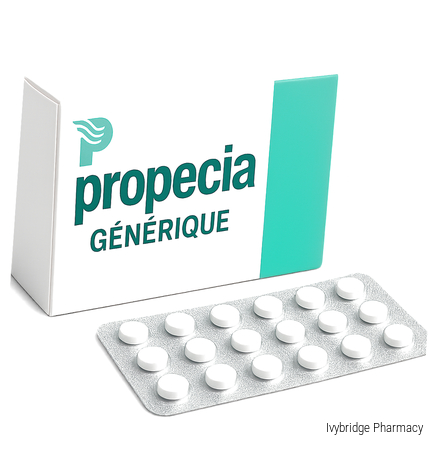
- Is Propecia available without prescription in the UK?
- What does Prescription Only Medicine (POM) mean in the UK?
- General information about Propecia (finasteride)
- How finasteride affects DHT and hair loss
- Price and availability information
- Strengths, formulations and pack types
- Male pattern baldness and Propecia’s indication
- UK legal classification: POM and online purchase
- Alternatives for hair loss treatment
- Propecia compared with other hair loss medicines
- Diet, lifestyle and hair health
- Side effects and tolerability
- Long-term use, monitoring and safety
- Warnings, contraindications and interactions
- Additional information about generic Propecia
Is Propecia available without prescription in the UK?
Propecia (finasteride 1 mg) is classified as a Prescription Only Medicine (POM) in the United Kingdom. This means that under UK law, it may only be legally supplied following a valid prescription from a qualified healthcare professional. Unlike certain over-the-counter products, genuine Propecia branded finasteride cannot be sold in a pharmacy or online without prescription.
Despite the POM status, some online vendors based outside the UK offer generic finasteride formulations without requiring or verifying a prescription. While these routes may allow buyers to purchase Propecia online without prescription, they carry potential legal and safety risks, including unregulated manufacturing standards, uncertain provenance, and importation regulations.
Ivybridge Pharmacy does not supply Propecia without a prescription in the UK. For safe, regulated treatment, speak to a UK-registered prescriber or visit a local pharmacy.
What does Prescription Only Medicine (POM) mean in the UK?
In the UK, medicines are regulated under three main legal supply categories:
- Prescription Only Medicine (POM): Requires a valid prescription from a doctor or other authorised prescriber.
- Pharmacy medicine (P): Can be sold by a pharmacist without a prescription but under supervision (e.g., certain allergy tablets).
- General Sales List (GSL): Can be sold broadly in retail outlets without pharmacist supervision (e.g., simple painkillers).
Propecia’s active ingredient, finasteride 1 mg, is POM due to its mechanism of action, potential side effects, and need for medical assessment before and during treatment. A healthcare professional ensures suitability, monitors response, and addresses any adverse events.
Attempting to purchase Propecia without a prescription may breach UK regulations and carry health risks. Always seek professional advice before starting finasteride therapy.
General information about Propecia (finasteride)
What is Propecia?
Propecia is the brand name for finasteride 1 mg, a synthetic 4-azasteroid compound that functions as a type II 5-alpha reductase inhibitor. It is indicated for the treatment of male pattern baldness (androgenetic alopecia) in men aged 18 to 41 years.
What is finasteride?
Finasteride is the active pharmaceutical ingredient in Propecia. It blocks the conversion of testosterone to dihydrotestosterone (DHT) by inhibiting the 5-alpha reductase enzyme. DHT is a potent androgen implicated in hair follicle miniaturisation leading to thinning and hair loss.
Why choose generic vs branded?
Generic finasteride products contain the same active ingredient and are subject to regulatory standards for quality, safety and efficacy. They often cost less than branded Propecia, offering a cheaper option. However, inactive ingredients, tablet appearance, packaging and bioavailability profiles may differ slightly.
Is Propecia a hormone?
No. Propecia is not a hormone replacement. It influences hormonal pathways by reducing DHT levels, but it does not supply or mimic hormones.
How long before Propecia works?
Visible hair regrowth or reduction in hair thinning may take three to six months of continuous daily treatment. Maximum benefits are typically assessed after 12 months. Early on, some users may notice increased shedding, which often represents old hairs making way for stronger regrowth.
How finasteride affects DHT and hair loss
What is DHT?
Dihydrotestosterone (DHT) is an androgen derived from testosterone by the action of 5-alpha reductase. In genetically predisposed men, DHT binds to follicle receptors causing hair follicles to shrink and produce progressively thinner hairs.
How does finasteride inhibit 5-alpha reductase?
Finasteride selectively inhibits the type II isoenzyme of 5-alpha reductase found in hair follicles and prostate tissue. By reducing the conversion of testosterone to DHT by up to 70%, it lowers scalp and serum DHT levels, slowing or reversing follicular miniaturisation.
Does Propecia cure baldness?
Propecia does not “cure” baldness, but it can halt progression and promote regrowth in many men with early to moderate androgenetic alopecia. Its effectiveness varies by individual and stage of hair loss.
Is finasteride systemic?
Yes. Finasteride is absorbed into the bloodstream after oral administration and exerts systemic effects. This distribution underscores the need for medical oversight and awareness of potential systemic side effects.
What happens if treatment stops?
Discontinuing finasteride generally leads to the gradual return of DHT levels and resumption of hair thinning within 6 to 12 months. Continued daily dosing is required to maintain benefits.
Price and availability information
How much does Propecia cost in the UK?
Prices for finasteride products vary by brand, generic status, pack size and supplier. Purchasing generic finasteride online without prescription may appear cheaper up front, but risks include uncertain quality and potential customs issues. Below is information for guidance; contact Ivybridge Pharmacy for prescription-based pricing.
Why do prices differ?
Price differences reflect brand licensing, manufacturer discounts, packaging, distribution, retailer margin and prescription service fees. A cheaper price does not guarantee safety or authenticity if the source is unregulated.
| Product | Strength | Pack Size | Price (GBP) | Status | Notes |
|---|---|---|---|---|---|
| Propecia | 1 mg | 28 tablets | £45.00 | POM | Branded; prescription required |
| Generic finasteride | 1 mg | 30 tablets | £15.99 | POM | Lower cost; prescription required |
| Cheaper overseas generic* | 1 mg | 90 tablets | £25.00 | Unregulated | Risk of counterfeit; no UK prescription control |
*Purchase without prescription often involves overseas pharmacies and carries legal and safety risks.
Strengths, formulations and pack types
What strengths of finasteride exist?
In the UK, finasteride is licensed at 1 mg for androgenetic alopecia (Propecia) and 5 mg for benign prostatic hyperplasia (under different brand names). For hair loss, only the 1 mg strength is authorised.
What formulations are available?
Finasteride for hair loss is supplied as oral film-coated tablets of 1 mg. Other strengths or formulations are for different indications and not suitable substitutes.
Why does pack size matter?
Pack size determines treatment duration and cost. Standard packs contain 28 tablets (four weeks). Larger packs (e.g., 56 or 84 tablets) may lower unit price but require multiple prescriptions.
| Feature | Why it matters |
| Active ingredient | Finasteride 1 mg for hair loss |
| Strength | One milligram per tablet |
| Formulation | Film-coated tablet for oral use |
| Pack size | Treatment duration and cost per mg |
| Legal status | POM requires prescription supply |
Are generic and branded Propecia identical?
Yes, generic finasteride tablets contain the same active molecule at 1 mg dosage when marketed under UK license. Excipients, tablet color and branding differ. Efficacy and safety are equivalent if sourced from reputable manufacturers.
Male pattern baldness and Propecia’s indication
What is androgenetic alopecia?
Androgenetic alopecia (male pattern baldness) is a hereditary condition characterised by progressive hair follicle miniaturisation in defined scalp regions (temporal and vertex). It affects up to 50% of men by age 50.
Who is suitable for Propecia?
Propecia is indicated for men aged 18–41 years with mild to moderate vertex hair loss. It is not authorised for use in women or children. A clinical assessment is required to confirm diagnosis and rule out other hair disorders.
How quickly does Propecia work?
Clinical trials show initial benefits at three months, with optimal results at 12 months. Continued daily dosing is needed to maintain effects. Results vary, and not all men respond equally.
What about pattern and severity?
Early intervention yields better outcomes. Men with advanced Norwood scale stages (large bald areas) may see limited regrowth but can experience slowed progression.
Can Propecia regrow hair on the frontal hairline?
Propecia is more effective on the vertex and crown than on the frontal hairline. Some users report modest improvements at the frontal region, but prediction of response is individual.
UK legal classification: POM and online purchase
Why is Propecia POM in the UK?
Regulators classify finasteride 1 mg as POM due to endocrine effects, potential sexual side effects, and the need for medical evaluation before and during treatment. It ensures safe use under professional supervision.
Can you buy Propecia online without prescription?
Legitimate UK-based pharmacies must verify a prescription before supplying Propecia. Some overseas online pharmacies claim to supply without prescription, but this practice circumvents legal requirements and national medicine regulations.
What are the risks of illegal purchase?
Unregulated products may be counterfeit, substandard, contaminated or incorrectly dosed. Customs seizure, importation fines and lack of pharmacovigilance are additional concerns.
Who regulates medicine classification?
The Medicines and Healthcare products Regulatory Agency (MHRA) oversees classification, licensing and reclassification of medicines in the UK. They enforce prescription requirements and investigate illegal supply.
Alternatives for hair loss treatment
What other treatments exist?
- Topical minoxidil (2% or 5%)
- Low-level laser therapy devices
- Hair transplantation surgery
- Platelet-rich plasma (PRP) injections
- Off-label treatments and supplements
How does minoxidil differ?
Minoxidil is a vasodilator that promotes blood flow to hair follicles and prolongs the anagen (growth) phase. It is applied topically and can be used in combination with finasteride for enhanced effect.
Are natural remedies effective?
Supplements such as saw palmetto or biotin are marketed for hair health but have limited clinical evidence compared to approved treatments. They may serve as adjunctive measures rather than primary therapy.
Propecia compared with other hair loss medicines
How does Propecia compare with dutasteride?
Dutasteride inhibits both type I and II 5-alpha reductase, leading to greater reductions in DHT. It is often prescribed off-label for hair loss but is not licensed for androgenetic alopecia in the UK. Propecia’s selectivity and established safety profile underpin its approval.
How does finasteride compare with topical minoxidil?
Finasteride addresses the hormonal cause of hair loss, while minoxidil acts on follicle stimulation. Combining both can offer synergistic benefits in many men.
| Feature | Finasteride (Propecia) | Dutasteride | Minoxidil |
| Drug class | 5-alpha reductase inhibitor | Dual 5-alpha reductase inhibitor | Vasodilator |
| Main mechanism | Reduces DHT | Greater DHT reduction | Increases follicle blood flow |
| Formulation | Oral tablet | Oral capsule | Topical solution or foam |
| UK license | Yes for hair loss | No | Yes |
Is one treatment always better?
Choice depends on individual factors: severity of hair loss, tolerance of side effects, treatment goals, and cost. A specialist consultation can guide optimal regimen.
Diet, lifestyle and hair health
Can diet influence hair loss?
Adequate protein, iron, zinc and vitamins A, D and B complex support hair follicle health. A balanced diet may complement medical treatments but cannot replace finasteride’s action on DHT.
Does stress affect hair?
High stress can trigger telogen effluvium (diffuse shedding), exacerbating pattern baldness. Stress management techniques, such as exercise and mindfulness, can improve overall scalp health.
Are supplements useful?
Biotin, collagen peptides and omega-3 fatty acids are popular supplements. Clinical proof is limited, but some individuals report subjective improvements in hair thickness and strength.
Does scalp care matter?
Regular gentle cleansing, avoiding harsh chemicals and protecting from UV can reduce damage. Scalp massage may improve circulation but does not replace pharmacological therapy.
Side effects and tolerability
Can Propecia cause side effects?
Yes. Finasteride can cause side effects in a minority of users. The patient leaflet lists known adverse reactions. Most men tolerate treatment well, but early monitoring is important.
| Category | Examples |
| Sexual | Decreased libido, erectile dysfunction, reduced ejaculate volume |
| Psychological | Depression, anxiety |
| Breast | Tenderness, enlargement |
| Hypersensitivity | Rash, swelling |
| Long-term concerns | Persistent sexual dysfunction reported rarely post-treatment |
Are side effects reversible?
Most sexual side effects resolve after discontinuation, but a small number of men report persistent symptoms. Psychological effects should be assessed promptly by a healthcare professional.
Why does the leaflet list rare events?
Regulatory guidelines require listing all suspected adverse reactions across frequency categories to inform patients and practitioners.
Long-term use, monitoring and safety
Why is medical review important?
Periodic assessment ensures ongoing suitability, monitors PSA levels (finasteride can lower PSA readings), and evaluates side effect profile. A doctor may adjust dose or stop treatment based on benefit-risk balance.
Does finasteride affect prostate health?
Finasteride reduces prostate volume and can mask early PSA changes used in prostate cancer screening. Physicians adjust PSA interpretation or monitor alternative markers.
Can finasteride impact fertility?
Finasteride may reduce sperm count, motility and semen volume in some men. Fertility concerns warrant discussion with a specialist if conception is planned.
Warnings, contraindications and interactions
Who should avoid Propecia?
- Women and children (teratogenic risk to male fetus).
- Men with known hypersensitivity to finasteride.
- Patients with liver impairment (monitoring recommended).
- Individuals planning fertility or experiencing infertility.
Can finasteride interact with other medicines?
Finasteride has low potential for drug-drug interactions. Concomitant use of certain hormonal therapies or antiandrogens should be supervised by a specialist.
Are there lab test considerations?
Finasteride lowers serum DHT and PSA. Baseline and follow-up PSA measurements should be interpreted in context of treatment.
Additional information about generic Propecia
What does “generic finasteride” mean?
Generic finasteride contains the same active ingredient as Propecia and meets regulatory standards for quality and efficacy. Appearance, branding and packaging differ between manufacturers.
Why do leaflets vary?
Different marketers may have slightly varied patient information leaflets reflecting their specific licence, excipients and legal wording. The core safety and efficacy data remain consistent.
What about counterfeit warnings?
Only purchase finasteride from MHRA-registered pharmacies or licensed prescribers. Counterfeit tablets may contain incorrect doses or harmful impurities.
Where to verify UK medicine information?
Consult the MHRA website, electronic Medicines Compendium (eMC), and speak to qualified pharmacists or doctors for up-to-date prescribing information and safety updates.
Does this replace medical advice?
No. This page provides general information only. For personalised advice, speak with a healthcare professional. Ivybridge Pharmacy is located at 7 Erme Court, Ivybridge, Devon PL21 0SZ. Contact us at +44 1752 892245 for prescription guidance and legitimate purchase options.
Ivybridge
Devon
PL21 0SZ