- Is isotretinoin available without prescription in the UK?
- What does Prescription Only Medicine mean in the UK?
- General information about isotretinoin
- How isotretinoin works
- Price and availability information
- Strengths, formulations and pack types
- Severe acne and indications
- UK legal classification: GSL, P and POM
- Alternatives for acne treatment
- Isotretinoin compared with other treatments
- Food, alcohol and lifestyle considerations
- Side effects and tolerability
- Long-term use and excessive exposure
- Warnings, contraindications and interactions
- Additional information about isotretinoin
Is isotretinoin available without prescription in the UK?
No. Isotretinoin is classified as a Prescription Only Medicine (POM) in the UK and cannot be legally supplied without a valid prescription issued by an authorised healthcare professional. Despite online offers to buy, purchase or order isotretinoin cheap and fast without prescription, patients must follow legal and medical guidelines to ensure safe and appropriate use.
What does Prescription Only Medicine mean in the UK?
The UK divides medicines into three main categories: Prescription Only Medicine (POM), Pharmacy medicine (P) and General Sales List (GSL). POM drugs like isotretinoin require a prescription because of their potential for serious side effects, the need for specialist monitoring and controlled distribution. Pharmacy medicines can be supplied without prescription under the supervision of a pharmacist, while GSL medicines can be sold freely in retail outlets.
General information about isotretinoin
What is isotretinoin?
Isotretinoin is a potent retinoid derivative of vitamin A used primarily for severe and treatment-resistant acne, including nodular, cystic and conglobate forms. It is marketed under various brand names and generic forms.
What type of medicine is a retinoid?
Retinoids are compounds structurally related to vitamin A that regulate cell proliferation, differentiation and apoptosis. In dermatology, they play a key role in normalising skin cell turnover and reducing sebum production.
What is the active ingredient?
The pharmacologically active substance is isotretinoin (13-cis retinoic acid). Generic products contain the same molecular entity at specified strengths but may vary in excipients, capsule shell and packaging.
Why is isotretinoin used for acne?
By reducing oil gland size and sebum output, normalising epithelial cell shedding and exhibiting anti-inflammatory properties, isotretinoin targets the underlying mechanisms of acne. It can produce long-lasting remissions in many patients with severe lesions.
Is isotretinoin an antibiotic?
No. Unlike oral antibiotics used in acne (e.g., tetracycline or erythromycin), isotretinoin does not act by killing bacteria. Its primary effects are on skin cell behaviour and glandular activity.
Is isotretinoin safe?
While highly effective, isotretinoin is associated with a teratogenic risk, mental health considerations and laboratory abnormalities. Strict prescribing guidelines, including pregnancy prevention programs, are in place to ensure patient safety.
How isotretinoin works
What is the mechanism of action?
Isotretinoin binds to nuclear retinoic acid receptors and modulates gene expression. The result is decreased sebaceous gland size, reduced sebum excretion, altered keratinisation of follicular epithelium and reduced inflammation in acne lesions.
How quickly does isotretinoin act?
Some patients notice reduced oiliness and fewer new lesions within two to four weeks. Full therapeutic effect typically emerges over several months of continuous treatment.
Does isotretinoin treat other skin conditions?
Off-label uses include treatment of recalcitrant rosacea, psoriasis, keratinisation disorders and certain cancers under specialist supervision. Any non-acne indication requires careful medical assessment and monitoring.
Can isotretinoin prevent acne scarring?
By reducing severe inflammatory lesions and nodules, isotretinoin can lower the risk of permanent scarring. Its anti-inflammatory effects also contribute to reduced tissue damage during flares.
Does treatment relapse occur?
A minority of patients may experience recurrence of acne after completing a standard course. In such cases, a second course or maintenance therapy under medical supervision may be considered.
Price and availability information
How much does isotretinoin cost in the UK?
Prices vary by strength, brand or generic status, pack size and retailer. For current purchase price and best deals on generic isotretinoin, contact Ivybridge Pharmacy or check online. Fast delivery and competitive pricing are available for valid prescriptions.
Why do prices vary?
Price differences reflect manufacturing costs, patent status, market competition, bulk discounts, pharmacy mark-up and promotional offers. A lower price for generic isotretinoin does not imply reduced quality or efficacy.
| Example | Strength | Formulation | Price | Status | Note |
|---|---|---|---|---|---|
| Accutane® | 20 mg | Oral capsules | Not stated | Brand POM | Prescription required |
| Generic A | 10 mg | Soft gel capsules | Not stated | Generic POM | Cheaper generic alternative |
Strengths, formulations and pack types
What strengths of isotretinoin exist?
Standard oral formulations include 10 mg, 20 mg, 30 mg and 40 mg capsules. Dosing is individualised by body weight and severity of acne and may require dose adjustments during therapy.
What formulations are available?
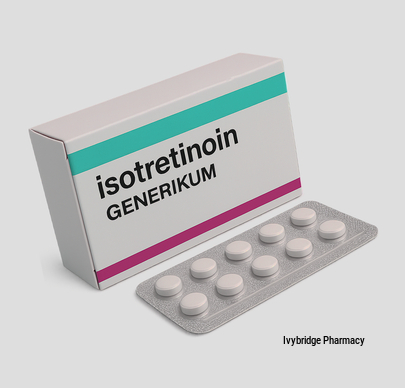
Most UK products are soft gel capsules in blister packs or bottles. Specialty formulations may include extended-release microsphere capsules. There is no OTC form of isotretinoin.
Why does pack size matter?
Pack sizes correspond to treatment duration. For a typical 16–24 week course, multiple packs may be dispensed. The prescribing physician determines the total quantity based on target cumulative dose.
| Feature | Why it matters |
| Strength | Guides daily dose calculation |
| Formulation | Affects bioavailability and tolerability |
| Pack size | Determines treatment course length |
| Brand vs generic | May affect price but not active ingredient |
| Legal category | Prescription only |
Are generic and branded isotretinoin identical?
Generic isotretinoin must meet regulatory standards for bioequivalence to branded reference products. Differences may exist in capsule shell, excipients and packaging, but the active ingredient and therapeutic effect are equivalent when properly authorised.
Severe acne and indications
What is nodular and cystic acne?
Nodular acne features large, firm, inflammatory nodules deep in the skin. Cystic acne involves pus-filled lesions that may coalesce, leading to discomfort and potential scarring.
Who is eligible for isotretinoin?
Adults and adolescents with severe recalcitrant nodular acne, moderate acne unresponsive to antibiotics or acne causing physical or psychological scarring may be considered. Treatment should follow specialist dermatology guidelines.
Is isotretinoin appropriate for mild acne?
No. For mild to moderate acne, topical treatments, antibiotics or hormonal therapies are preferred. Isotretinoin is reserved for severe or resistant cases due to its risk profile.
Can isotretinoin treat acne in women?
Yes, but careful pregnancy prevention measures are mandatory. Women of childbearing potential must use effective contraception before, during and after treatment, as isotretinoin is highly teratogenic.
What monitoring is required?
Regular blood tests (lipids, liver function) and pregnancy tests for women of childbearing potential are required. Clinical review ensures dose adjustments and detection of adverse effects.
UK legal classification: GSL, P and POM
What is a POM?
Prescription Only Medicine status means isotretinoin can only be supplied under a prescription from a qualified prescriber. This ensures patient safety through appropriate assessment and monitoring.
Why is isotretinoin not a pharmacy or GSL medicine?
Because of its significant risks (teratogenicity, laboratory abnormalities, potential psychiatric effects), it requires direct clinical oversight rather than over-the-counter supply.
Who regulates POM classification?
The Medicines and Healthcare products Regulatory Agency (MHRA) oversees classification and ensures medicines like isotretinoin have appropriate prescribing restrictions and safety measures.
Can classifications change?
Regulatory bodies can reclassify medicines based on new safety data, but isotretinoin’s risk profile makes reclassification to OTC highly unlikely without major formulation changes and risk mitigation strategies.
Alternatives for acne treatment
What other treatment categories exist?
- Topical retinoids (tretinoin, adapalene, tazarotene);
- Topical antibiotics (clindamycin, erythromycin);
- Oral antibiotics (doxycycline, minocycline, lymecycline);
- Hormonal therapies (combined oral contraceptives, spironolactone);
- Physical treatments (chemical peels, light therapies).
Why might isotretinoin be preferred?
When acne is severe or resistant to other modalities, isotretinoin offers high rates of long-term clearance and reduced scarring compared with repeated antibiotic courses.
Isotretinoin compared with other treatments
How does isotretinoin compare with antibiotics?
Oral antibiotics reduce bacterial colonization and inflammation but often lead to relapse after discontinuation. Isotretinoin addresses multiple pathogenic factors and can induce prolonged remission.
How does isotretinoin compare with topical retinoids?
Topical retinoids are effective for comedonal acne and mild inflammatory lesions but have limited efficacy in severe nodular or cystic acne. Isotretinoin’s systemic action reaches deep lesions and glands.
| Feature | Isotretinoin | Oral antibiotics | Topical retinoids |
| Main mechanism | Sebum reduction, normalises keratinisation | Antibacterial, anti-inflammatory | Normalises keratinisation, comedolytic |
| Indication | Severe nodular/cystic acne | Moderate inflammatory acne | Mild to moderate comedonal acne |
| Duration | 16–24 weeks typical | 6–12 weeks or longer | Continuous long-term |
| Side effects | Systemic, teratogenic | Gastrointestinal, photosensitivity | Local skin irritation |
Is one treatment always better?
No. Choice depends on acne severity, patient factors, previous response, risk tolerance and specialist guidance.
Food, alcohol and lifestyle considerations
Can diet influence acne?
Certain high-glycaemic foods and dairy products have been implicated in acne flares in some individuals. A balanced diet and hydration are recommended, though evidence varies.
Can alcohol affect isotretinoin therapy?
Alcohol may exacerbate liver enzyme elevations and dehydration. Patients should limit alcohol intake during treatment and monitor liver function tests as advised.
Does sun exposure matter?
Isotretinoin can increase skin sensitivity to ultraviolet light. Use broad-spectrum sun protection and avoid excessive sunbathing or tanning beds.
Can exercise influence side effects?
Strenuous exercise may increase risk of musculoskeletal discomfort. Patients should stay hydrated and adjust activity levels if experiencing joint or muscle pain.
Side effects and tolerability
Can isotretinoin cause side effects?
Yes. Nearly all users experience mucocutaneous dryness (lips, skin), and some may develop headaches, mood changes or laboratory abnormalities. Severity varies between individuals.
| Area | Examples described in product information |
| Skin and mucous membranes | Cheilitis, dry skin, eczema-like rash |
| Musculoskeletal | Myalgia, arthralgia, back pain |
| Nervous system | Headache, mood alterations, depression risk |
| Gastrointestinal | Pancreatitis (rare), liver enzyme elevation |
| Vision and hearing | Night vision disturbances, tinnitus (rare) |
Are mood changes common?
Some patients report depressive symptoms or mood swings. Any new or worsening psychiatric symptoms require immediate medical evaluation and possible discontinuation.
Why is laboratory monitoring essential?
Baseline and periodic checks of liver function tests, lipids and complete blood count help detect early adverse effects and guide dose adjustments.
What about birth defects?
Isotretinoin is highly teratogenic and can cause severe congenital malformations. Strict adherence to pregnancy prevention programs is mandatory.
Long-term use and excessive exposure
Why is isotretinoin not for long-term use?
The standard course is 16–24 weeks to reach a cumulative dose associated with durable remission. Prolonged exposure increases risk of toxicity without additional benefit.
Can repeated courses be given?
Occasionally, a second course may be prescribed if relapse occurs. Total lifetime exposure should be minimised, and cumulative dose monitored to balance efficacy and safety.
What is the risk of excessive exposure?
High cumulative doses can amplify dry skin complications, dyslipidaemia and liver dysfunction. Oversight by a dermatologist and regular blood tests mitigate these risks.
Why is pregnancy prevention crucial?
Even brief exposure during embryogenesis can result in severe birth defects. Women of childbearing potential must use two forms of contraception and undergo regular pregnancy testing.
Warnings, contraindications and interactions
Who should be especially cautious with isotretinoin?
- Women who are pregnant or planning pregnancy;
- Patients with severe liver disease or hyperlipidaemia;
- Individuals with a history of depression or suicidal ideation;
- Patients with inflammatory bowel disease (exacerbation risk);
- People taking vitamin A supplements (risk of hypervitaminosis A).
Can isotretinoin interact with other medicines?
Yes. Concomitant use of tetracyclines increases risk of benign intracranial hypertension. Vitamin A supplements amplify toxicity. CYP inducers may alter isotretinoin metabolism.
Why avoid vitamin A supplements?
Both isotretinoin and vitamin A are teratogenic and hepatotoxic. Combined use significantly raises the risk of central nervous system pressure and liver damage.
What about dermatological procedures?
Procedures like waxing, dermabrasion or laser resurfacing can cause skin fragility and poor healing while on isotretinoin. They are contraindicated during and shortly after therapy.
Why report new symptoms promptly?
Suppressing acne can mask emerging signs of serious adverse reactions. Early reporting ensures timely intervention and reduces complication risk.
Can isotretinoin be used in breastfeeding?
No. Isotretinoin passes into breast milk and can harm the nursing infant. Breastfeeding must be avoided during and for a specified period after treatment.
Additional information about isotretinoin
What does “generic isotretinoin” mean?
A generic formulation contains the same active molecule as the reference brand and must demonstrate bioequivalence. Inactive ingredients and capsule appearance may differ.
Why can products have different patient leaflets?
Each licensed product has a Summary of Product Characteristics and patient leaflet tailored to its specific formulation, dosage regimen, storage conditions and legal classification.
Why is pregnancy prevention program important?
UK regulations mandate enrolment in a pregnancy prevention plan with regular pregnancy testing, contraceptive counselling and informed consent to minimise teratogenic risk.
Where can UK medicine information be verified?
Authoritative sources include the MHRA website, the electronic Medicines Compendium (eMC), official patient leaflets and qualified healthcare professionals.
Does this information replace professional advice?
No. This page offers general information only. For personalised advice, prescription and monitoring, please contact the pharmacy team at Ivybridge Pharmacy, 7 Erme Court, Ivybridge, Devon PL21 0SZ.
Ivybridge
Devon
PL21 0SZ