- Is furosemide available without prescription in the UK?
- What does Prescription Only Medicine mean in the UK?
- General information about furosemide
- How furosemide works
- Price and availability information
- Strengths, formulations and pack types
- Indications: oedema, hypertension and heart failure
- UK legal classification: POM
- Alternatives to furosemide
- Furosemide compared with other diuretics
- Dosage, administration and lifestyle considerations
- Side effects and tolerability
- Long-term use and excessive exposure
- Warnings, contraindications and interactions
- Additional information about furosemide
Is furosemide available without prescription in the UK?
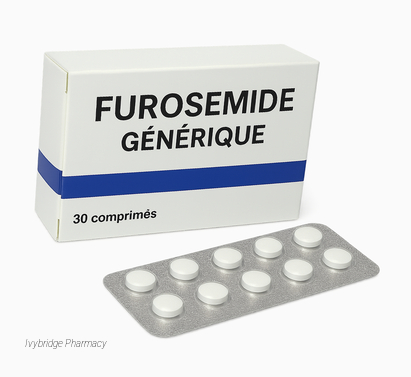
Furosemide is classified as a Prescription Only Medicine (POM) in the United Kingdom. It cannot be sold or supplied without a valid prescription from a qualified prescriber such as a general practitioner or specialist. Therefore, any offer to buy or purchase furosemide without prescription is non-compliant with UK regulations. Ivybridge Pharmacy can facilitate online orders for furosemide when you provide a valid prescription. Fast delivery and discreet packaging are available, but prescription verification is essential to ensure safe and legal supply. While you may see marketing claims to buy furosemide cheap or online without prescription, UK law requires that POMs be dispensed under supervision. This approach safeguards you by ensuring that dosing, monitoring and contraindications are properly assessed by a healthcare professional.
What does Prescription Only Medicine mean in the UK?
In the UK, medicines are classified into three main categories: General Sales List (GSL), Pharmacy Medicine (P), and Prescription Only Medicine (POM). Prescription Only Medicines, like furosemide, must be supplied in accordance with a valid prescription. This classification is reserved for medicines where professional oversight is considered essential for safe and effective use. When you order furosemide online from an accredited pharmacy like Ivybridge Pharmacy, our pharmacists will review your prescription, check for interactions, assess your medical history, and confirm that furosemide is appropriate for your condition. The POM classification ensures that patients receive the correct dose, guidance on possible side effects, and instructions to monitor wellbeing. Without this framework, the risk of adverse events rises, including electrolyte imbalance, dehydration and kidney function changes.
General information about furosemide
What is furosemide?
Furosemide is a potent loop diuretic used to treat conditions associated with fluid retention and high blood pressure. It promotes the excretion of water, sodium, chloride and other electrolytes from the kidneys, helping to reduce swelling (oedema) and lower blood pressure.
What therapeutic class does it belong to?
Furosemide is part of the loop diuretic class of medicines. These agents act on the ascending limb of the loop of Henle in the kidney, which is critical for water and salt reabsorption.
What is the active ingredient?
The active pharmaceutical ingredient is furosemide. Generic and branded versions contain the same core molecule, but excipients and tablet designs may vary. Ivybridge Pharmacy offers quality-assured UK-licensed generic furosemide at a cheaper price compared with some branded products.
Why use furosemide rather than other diuretics?
Loop diuretics like furosemide have a powerful and rapid diuretic effect, making them suitable for acute management of oedema and severe hypertension where quick volume reduction is needed.
How furosemide works
Site of action in the kidney
Furosemide acts predominantly on the Na⁺-K⁺-2Cl⁻ co-transporter in the thick ascending limb of the loop of Henle. By blocking this transporter, it prevents reabsorption of sodium and chloride, leading to increased water excretion.
Effect on electrolyte balance
The diuretic effect is accompanied by increased excretion of sodium, chloride, potassium, magnesium and calcium. This powerful loss of electrolytes can be beneficial to remove excess fluid but requires careful monitoring to avoid hypokalaemia and other imbalances.
Onset and duration of action
Oral furosemide typically begins to work within one hour, peaking at around one to two hours after dosing and lasting for six to eight hours. Intravenous formulations have a faster onset within minutes, used in acute hospital settings.
Comparison with thiazide diuretics
Thiazide diuretics act at the distal convoluted tubule and are less potent. Furosemide’s loop action makes it more suitable for significant fluid removal, especially in heart failure and renal impairment.
Price and availability information
How much does furosemide cost in the UK?
The price of furosemide varies by brand, pack size and pharmacy. At Ivybridge Pharmacy, generic furosemide is available at a cheaper price compared to branded options. Order online to secure competitive rates and reduce costs. Prices reflect distribution, packaging, and licensing differences. A typical 40 mg tablet pack of 28 doses may range from £3 to £8, but discounts for larger orders or repeat prescriptions can reduce the price further.
Why do prices vary?
Variations in price between pharmacies reflect supply chain costs, pack size, licensing fees, and retailer margins. Generic versions tend to be cheaper than brands because of lower licensing and development costs. Bulk ordering and subscription services can further reduce the price per dose.
| Example | Strength | Formulation | Price | Status | Note |
|---|---|---|---|---|---|
| Generic Furosemide A | 40 mg | Tablets | £4.50 | In Stock | Buy online with prescription – fast delivery |
| Brand Furosemide B | 20 mg | Tablets | £7.20 | In Stock | Purchase with valid prescription |
Strengths, formulations and pack types
What strengths of furosemide exist?
Furosemide is commonly available in 20 mg, 40 mg and 500 mg/5 mL oral solution strengths. Intravenous form is used in hospital settings as 10 mg/mL ampoules.
What formulations are available?
Oral formulations consist of tablets and oral solution. Tablets may be scored for flexible dosing. The oral solution is primarily used in patients unable to swallow tablets. Ivybridge Pharmacy offers both generic tablets and solution formulations for home use.
Why does pack size matter?
Pack size can determine how many days of therapy are supplied and can affect price per tablet. Small packs may be more expensive per dose. Larger packs can be more cost-effective but require secure storage and proper adherence monitoring.
| Feature | Why it matters |
| Strength | Defines dose per unit |
| Formulation | Affects absorption and usability |
| Pack size | Impacts treatment duration and cost |
| Brand vs Generic | Brand may cost more; generics are cheaper |
| Legal category | Ensures prescription requirement |
Are generic and branded furosemide identical?
Generic furosemide contains the same active ingredient, quality standards and therapeutic effect as branded versions. Differences lie only in excipients, tablet shape or packaging.
Indications: oedema, hypertension and heart failure
What is oedema?
Oedema is the accumulation of excess fluid in tissues, leading to swelling of ankles, legs, abdomen or lungs (pulmonary oedema). Furosemide helps the body eliminate this fluid by increasing urine output.
How is furosemide used in hypertension?
Furosemide lowers blood pressure by reducing blood volume. It is commonly used when thiazide diuretics are inadequate or contraindicated. As a second-line or adjunct therapy, it can help achieve target blood pressure.
Role in heart failure
In heart failure, fluid retention exacerbates symptoms and increases cardiac workload. Furosemide offers symptomatic relief by reducing preload and improving breathing and exercise tolerance.
Off-label uses
Off-label uses include reducing intracranial pressure in cerebral oedema and managing hypercalcaemia by promoting calciuresis. These applications are guided by specialist prescribers.
UK legal classification: POM
Why is furosemide POM?
Its potent effect on fluid and electrolyte balance necessitates professional oversight. Prescription ensures appropriate indication, dose, and monitoring.
How to obtain furosemide?
Consult your GP or specialist. Submit the prescription to Ivybridge Pharmacy via secure online upload or at our Devon branch. Our pharmacists will dispense and deliver your order efficiently.
Regulatory authority
The Medicines and Healthcare products Regulatory Agency (MHRA) regulates furosemide licensing and classification in the UK. They monitor safety, efficacy, and quality standards.
Alternatives to furosemide
Thiazide diuretics
Examples include hydrochlorothiazide and bendroflumethiazide. They act more mildly and are first-line in uncomplicated hypertension.
Potassium-sparing diuretics
Agents such as spironolactone and amiloride preserve potassium and are often combined with loop diuretics to balance electrolyte loss.
Combination therapies
Fixed-dose combinations of diuretics with ACE inhibitors or ARBs can simplify treatment and enhance blood pressure control.
Non-diuretic options
In certain cases, lifestyle measures and non-pharmacological interventions may reduce fluid retention without diuretics.
Furosemide compared with other diuretics
| Feature | Furosemide | Hydrochlorothiazide | Spironolactone |
| Drug class | Loop diuretic | Thiazide diuretic | Potassium-sparing diuretic |
| Main mechanism | Inhibits Na-K-2Cl co-transporter | Inhibits Na-Cl co-transporter | Aldosterone antagonist |
| Onset | 1 hour (oral) | 2 hours | 2–3 hours |
| Duration | 6–8 hours | 12–24 hours | 24–48 hours |
| Potency | High | Moderate | Low |
| Electrolyte effect | Ca, Mg loss | Moderate K loss | K retention |
Which diuretic is best?
Choice depends on clinical indication, comorbidities, electrolyte needs and patient response. Your prescriber will recommend the optimal diuretic or combination.
Dosage, administration and lifestyle considerations
Typical dosing
Adults often start at 20–40 mg once daily, adjusting based on response. In oedema, doses up to 80–160 mg daily in divided doses may be required under supervision.
Administration tips
Take furosemide in the morning to avoid nocturia. Swallow tablets with water. The oral solution should be measured accurately with a dosing syringe.
Hydration and diet
Maintain adequate fluid intake and a balanced diet. High salt intake can counteract diuretic effect. Monitor potassium-rich foods or use supplements if recommended.
Monitoring
Regular blood tests for electrolytes, renal function and blood pressure are essential. Keep blood pressure logs to track your therapy.
Side effects and tolerability
| Area | Examples described in product information |
| Renal | Increased urination, dehydration, renal impairment |
| Electrolyte | Hypokalaemia, hyponatraemia, hypomagnesaemia |
| Metabolic | Hyperuricaemia, blood glucose changes |
| Hematologic | Thrombocytopenia, leukopenia (rare) |
| Gastrointestinal | Nausea, abdominal cramps, diarrhoea |
Common adverse effects
Increased frequency of urination, thirst, weakness and dizziness. Often dose-dependent and manageable by adjusting intake and timing.
Serious effects
Severe dehydration, electrolyte disturbances, hypotension and renal dysfunction. Contact your pharmacist or doctor if you experience muscle cramps, confusion or irregular heartbeat.
Long-term use and excessive exposure
Risks of prolonged diuresis
Long-term furosemide use can lead to chronic electrolyte imbalance, gout exacerbation and potential hearing impairment at high doses. Periodic review and lab monitoring are crucial.
Excessive dosing
Overdose can cause profound fluid and electrolyte loss, hypotension and acute kidney injury. Emergency care is required if overdose is suspected.
Withdrawal considerations
Do not stop furosemide abruptly if you have been taking it long-term. Your prescriber will taper the dose or switch you to an appropriate regimen to avoid rebound fluid retention.
Warnings, contraindications and interactions
Who should be cautious with furosemide?
- Patients with severe dehydration or electrolyte imbalance;
- Individuals with kidney or liver impairment;
- People with gout or diabetes;
- Those with low blood pressure or sensitivity to sulphonamides;
- Pregnant or breastfeeding women should consult their doctor;
- Children and elderly require dose adjustments and monitoring.
Drug interactions
Furosemide can interact with ACE inhibitors, NSAIDs, digoxin, lithium and aminoglycosides. These interactions may affect kidney function or electrolytes and require dose adjustments or monitoring.
Alcohol and lifestyle
Alcohol can potentiate dehydration and orthostatic hypotension. Avoid excessive alcohol and maintain hydration to reduce risk of adverse effects.
Additional information about furosemide
What does “generic furosemide” mean?
A generic product contains the same active ingredient as a reference branded medicine and meets regulatory standards for quality and efficacy. It offers a cheaper alternative without compromising safety.
Why check exact product information?
Different manufacturers may have distinct excipients, tablet scores and patient leaflets. Always read the leaflet and follow specific instructions for the product you receive.
Where to verify UK medicine information?
Reliable sources include the MHRA, electronic Medicines Compendium and your pharmacy. Ivybridge Pharmacy provides patient leaflets, professional advice and support to help you use furosemide safely.
Does this information replace professional advice?
No. This page is for general information. For personalised advice, please contact Ivybridge Pharmacy at 7 Erme Court, Ivybridge, Devon PL21 0SZ or consult your healthcare professional.
Ivybridge
Devon
PL21 0SZ