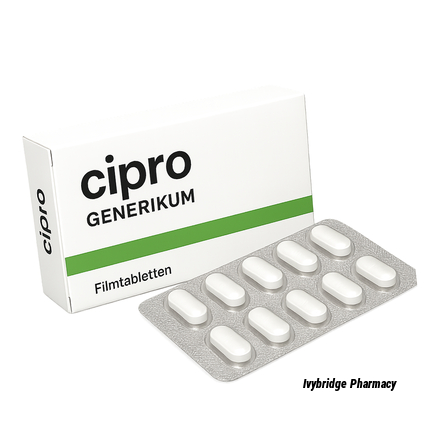
- Is Cipro available without prescription in the UK?
- What does Prescription Only Medicine (POM) mean?
- General information about ciprofloxacin
- How Cipro works
- Price and availability information
- Strengths, formulations and pack types
- Indications and uses
- UK legal classification: POM status
- Alternatives to Cipro
- Cipro compared with other antibiotics
- Food, alcohol and lifestyle considerations
- Side effects and tolerability
- Resistance, misuse and long-term considerations
- Warnings, contraindications and interactions
- Additional information about Cipro
Is Cipro available without prescription in the UK?
No. Ciprofloxacin (commonly called Cipro) is classified as a Prescription Only Medicine (POM) in the United Kingdom. This means you cannot legally buy ciprofloxacin without a valid prescription from a qualified healthcare professional. Online pharmacies may offer telemedicine consultations, but a prescription must be issued before purchase and shipment. Any supplier claiming to provide Cipro generically or cheaply without prescription is operating outside UK regulations.
What does Prescription Only Medicine (POM) mean?
Prescription Only Medicine (POM) is the highest level of legal classification for human medicines in the UK. POM status is assigned to medicines that require professional oversight due to potential side effects, interactions, or the seriousness of the conditions they treat. POM medicines can only be dispensed following a prescription from a doctor, dentist, or other qualified prescriber. Ciprofloxacin’s classification reflects its potency, risk of antimicrobial resistance if misused, and possible adverse reactions.
General information about ciprofloxacin
What is ciprofloxacin?
Ciprofloxacin is a broad-spectrum antibiotic in the fluoroquinolone class. It is active against a wide range of gram-positive and gram-negative bacteria by inhibiting bacterial DNA gyrase and topoisomerase IV. These enzymes are essential for DNA replication, transcription, repair, and recombination. Generic versions of ciprofloxacin contain the same active ingredient but differ in branding, excipients, tablet coating, and packaging.
History of fluoroquinolones
The fluoroquinolone class was first developed in the 1980s. Ciprofloxacin, introduced shortly thereafter, became one of the most widely used antibiotics worldwide due to its oral bioavailability, tissue penetration, and convenient dosing. Over time, concerns over resistance and rare side effects have led to more careful prescribing guidelines.
Mechanism of action overview
Ciprofloxacin acts by binding to bacterial DNA gyrase and topoisomerase IV, preventing the resealing of DNA strands during replication. This leads to double-stranded breaks and eventual bacterial cell death. The drug is bactericidal and exhibits concentration-dependent killing, making dosing and adherence critical for efficacy and reduction of resistance development.
How Cipro works
Absorption and distribution
Oral ciprofloxacin is rapidly absorbed with an average bioavailability of 70%. Peak plasma concentrations occur within one to two hours. Food can slow the rise in blood levels but does not significantly affect overall absorption. The drug distributes widely, achieving good concentrations in tissues such as lungs, prostate, bone, and urinary tract.
Elimination
Ciprofloxacin is eliminated via renal excretion (approximately 40–50% unchanged in urine) and hepatic metabolism. The half-life ranges from 3 to 5 hours in healthy adults, necessitating twice-daily dosing for most indications. Dosage adjustments may be required in renal impairment.
Pharmacodynamic considerations
As a concentration-dependent antibiotic, ciprofloxacin’s efficacy correlates with the peak concentration to minimum inhibitory concentration ratio (Cmax/MIC). Suboptimal dosing can lead to therapeutic failure and promote bacterial resistance. Compliance with the prescribed regimen is therefore essential.
Price and availability information
How much does generic Cipro cost in the UK?
Prices for generic ciprofloxacin tablets or oral suspension vary by pack size, strength, retailer, and additional services such as private prescription fulfillment. As a POM, the patient typically pays a prescription charge unless exempt, plus any dispensing fees charged by the pharmacy. Online pharmacies offering fast delivery may include consultation fees and shipping costs.
Why do prices vary?
Differences in price reflect manufacturing costs, importer margins, retailer mark-ups, pack presentation, and additional pharmacy services. Some online pharmacies advertise cheaper generic Cipro by sourcing from lower-cost suppliers, while branded versions or licensed suppliers may charge more. Always verify legality and product authenticity when seeking the lowest price.
| Example | Strength | Formulation | Price | Note |
|---|---|---|---|---|
| Generic A | 250 mg | Tablet, bottled pack of 10 | £12.50 | Prescription charge applies |
| Generic B | 500 mg | Tablet, blister pack of 20 | £19.99 | Online order + consultation fee |
| Branded Cipro | 500 mg | Tablet, blister pack of 10 | £35.00 | Licensed brand name |
Strengths, formulations and pack types
Available strengths
Ciprofloxacin tablets are commonly available in 250 mg and 500 mg strengths. An oral suspension is also produced for pediatric or swallowing-impaired patients. Intravenous formulations exist for hospital use but are not relevant to online purchase.
Formulations
Tablets are film-coated, scored for splitting, and designed to dissolve promptly. The oral suspension requires careful reconstitution. Generic excipients vary by manufacturer, which may affect taste, size, and dissolution speed but not antibacterial efficacy.
Pack types
- Blister packs of 10 or 20 tablets
- Bottles of 10, 20, or 30 tablets
- Oral suspension bottles with measuring device
Impact of pack size
Pack size often correlates with the standard duration of therapy for common infections (e.g., 7 or 14 days). Pharmacies may label packs with treatment length and inform patients that a full course is crucial to prevent resistance.
Indications and uses
Approved indications
- Urinary tract infections (complicated and uncomplicated)
- Prostatitis
- Lower respiratory tract infections (e.g., bronchitis, pneumonia)
- Skin and soft tissue infections
- Bone and joint infections
- Gastrointestinal infections (e.g., travellers’ diarrhoea, enteric fever)
- Sexually transmitted infections (e.g., gonorrhoea, when appropriate)
Off-label use
Some clinicians may prescribe ciprofloxacin off-label for infectious conditions not formally approved, based on evidence and local guidelines. Always follow prescriber instructions.
UK legal classification: POM status
Why is Cipro POM?
Ciprofloxacin’s potential for serious adverse effects (tendinopathy, QT prolongation, neurotoxicity) and contribution to antimicrobial resistance require oversight by a prescriber. The POM classification ensures that each prescription is based on clinical evaluation, susceptibility data when available, and consideration of alternative agents.
Regulatory oversight
The Medicines and Healthcare products Regulatory Agency (MHRA) enforces POM status. Pharmacies must verify prescriptions, dispense under appropriate conditions, and provide patients with safety information and counselling.
Alternatives to Cipro
Other antibiotic classes
- Beta-lactams (e.g., amoxicillin, co-amoxiclav)
- Macrolides (e.g., azithromycin, clarithromycin)
- Trimethoprim-sulfamethoxazole
- Tetracyclines (e.g., doxycycline)
- Other fluoroquinolones (e.g., levofloxacin, moxifloxacin)
Why choose alternatives?
Choice depends on infection type, susceptibility, patient allergy profile, and risk factors for side effects. Resistance patterns may limit ciprofloxacin’s utility in some regions.
Cipro compared with other antibiotics
| Feature | Ciprofloxacin | Amoxicillin | Azithromycin |
|---|---|---|---|
| Drug class | Fluoroquinolone | Beta-lactam | Macrolide |
| Spectrum | Broad, gram– and some gram+ | Broad, mainly gram+ | Gram+ and atypicals |
| Dosing frequency | Twice daily | Three times daily | Once daily |
| Resistance concerns | High if misused | Variable | Moderate |
| Key side effects | Tendinopathy, QT prolongation | Allergy, GI upset | GI upset, QT prolongation |
No single antibiotic is universally “best”. The prescriber must balance efficacy, safety, patient factors, and local resistance data.
Food, alcohol and lifestyle considerations
Taking with food
While ciprofloxacin can be taken with or without food, dairy products or calcium-fortified juices should be avoided within two hours of dosing as they can chelate the drug and reduce absorption. Adequate hydration is important to prevent crystalluria.
Alcohol
Alcohol does not directly interact with ciprofloxacin pharmacokinetics but may exacerbate side effects such as dizziness or gastrointestinal discomfort. Patients are advised to limit alcohol intake during treatment.
Exercise and tendon health
Ciprofloxacin is associated with risk of tendonitis and tendon rupture, particularly in older adults and those on corticosteroids. Avoid strenuous exercise or heavy lifting during therapy and report any tendon pain immediately.
Side effects and tolerability
| System | Examples |
|---|---|
| Gastrointestinal | Nausea, diarrhoea, abdominal pain, vomiting |
| Central nervous | Dizziness, headache, insomnia, mood changes |
| Musculoskeletal | Tendonitis, arthralgia, myalgia |
| Cardiac | QT prolongation, palpitations (rare) |
| Allergic | Rash, pruritus, anaphylaxis (rare) |
| Phototoxicity | Skin sensitivity to sunlight |
Patients should read the patient information leaflet and report severe or persistent side effects. Most adverse reactions are reversible upon discontinuation but may require medical management.
Resistance, misuse and long-term considerations
Antimicrobial resistance
Inappropriate or incomplete courses of ciprofloxacin contribute significantly to bacterial resistance. Resistant infections may require alternative, often more expensive or intravenous therapy. Always complete the full prescribed course.
Misuse prevention
Do not share antibiotics, alter doses, or stop early, even if symptoms improve. Pharmacies and prescribers play a key role in stewardship by verifying indication, dose, and duration.
Long-term risks
Fluoroquinolone use has been linked to peripheral neuropathy and potential effects on blood glucose regulation. Long-term prophylactic use is generally discouraged.
Warnings, contraindications and interactions
Contraindications
- Known hypersensitivity to ciprofloxacin or other fluoroquinolones
- Tendinopathy or tendon rupture history
- Myasthenia gravis
- Concurrent systemic corticosteroid use (increased tendon risk)
Drug interactions
- Antacids or supplements containing calcium, magnesium, aluminium, iron – reduce absorption
- Warfarin – potential increase in INR
- Theophylline – reduced clearance and toxicity risk
- Cytochrome P450 substrates (CYP1A2) – possible interactions
- QT-prolonging agents – additive cardiac risk
Special populations
Use in pregnancy and breastfeeding only when benefit outweighs risk. Dose adjustments may be required in renal impairment.
Additional information about Cipro
Generic versus branded
Generic ciprofloxacin contains the same active ingredient and therapeutic effect as branded Cipro. Generics must meet the same regulatory standards for quality, safety, and efficacy.
Checking authenticity
Purchase only from MHRA-registered pharmacies. Verify packaging, batch numbers, and expiry dates. Report suspected counterfeit products.
Where to find more information
Reliable sources include the electronic Medicines Compendium (eMC), NHS.uk, MHRA guidance and qualified healthcare professionals.
This information does not replace professional medical advice. Contact Ivybridge Pharmacy at 7 Erme Court, Ivybridge, Devon PL21 0SZ, or call +44 1752 892245 for personalised advice.
Ivybridge
Devon
PL21 0SZ